Editorial method
How we review home walking products
We do not have a lab and we do not claim to. What we have is a narrow brief: does this machine work in a small French apartment, and what do the published numbers say about it. This page explains where our information comes from and where the limits are.
What we cover and what we skip
The boundary is the first editorial decision, and it is a deliberate one.
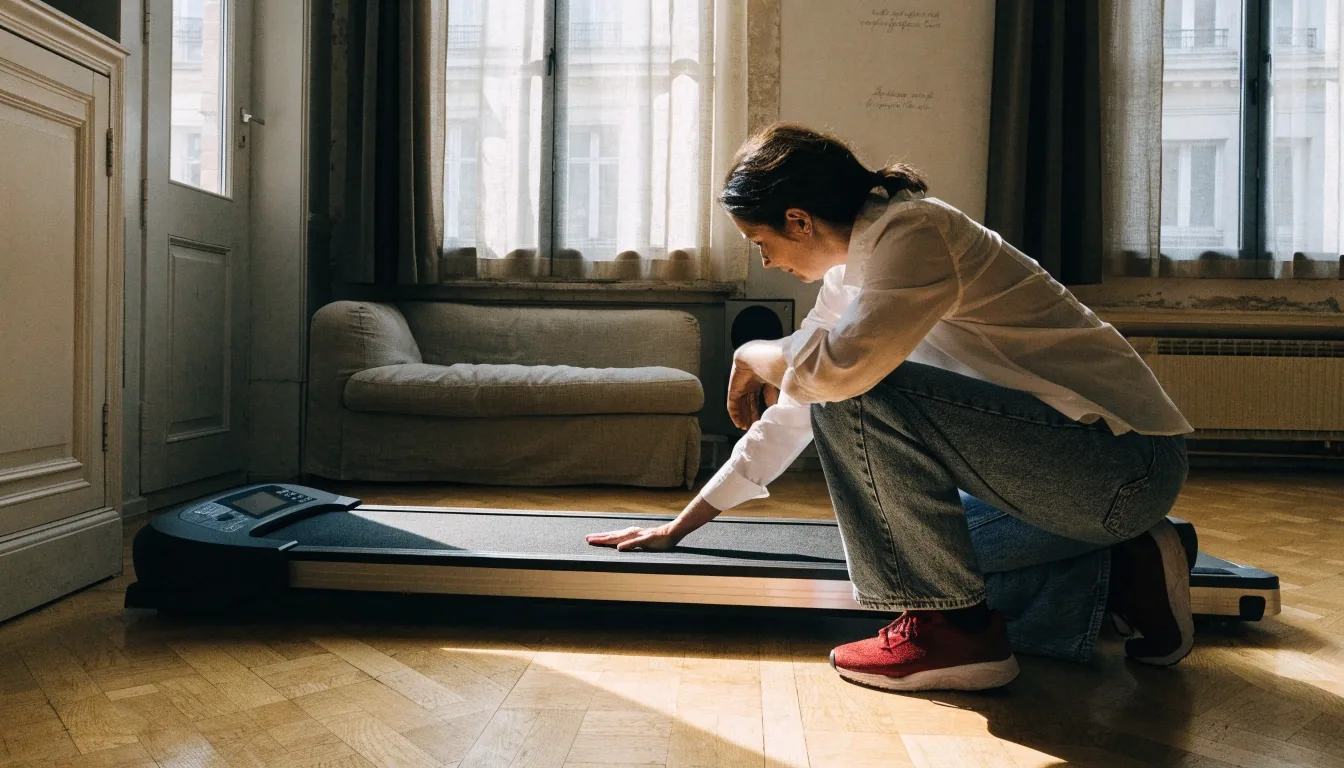
We cover compact home walking equipment: walking pads, under-desk treadmills, foldable treadmills, and 2-in-1 machines. We skip full-size gym treadmills, commercial equipment, and anything that needs a dedicated room. That boundary keeps the ranking useful for the reader we write for, someone in a compact flat who wants to move more without losing their living space.
It also means a genuinely good product can be excluded simply because it does not fit the brief. A well-built machine aimed at a spare bedroom the size of a garage is not our subject, no matter how good it is at what it does. If you are shopping for a full-size treadmill, this is the wrong ranking and we would rather you knew that early than spent an hour comparing entries that were never written for your flat.
- In the ranking
- Walking pads, under-desk treadmills, foldable treadmills and 2-in-1 machines that fold down for storage in a flat.
- Outside the brief
- Full-size gym treadmills, commercial equipment and any machine that needs a room of its own.
Where the specifications come from
Every number in our ranking is taken from a retailer or brand listing. We name the source because a spec without one is just a claim. When a listing omits a number, we say the number is missing rather than estimating it.
Product or range
Published figure we use
Source named
-
Kettler Alpha Walk 400
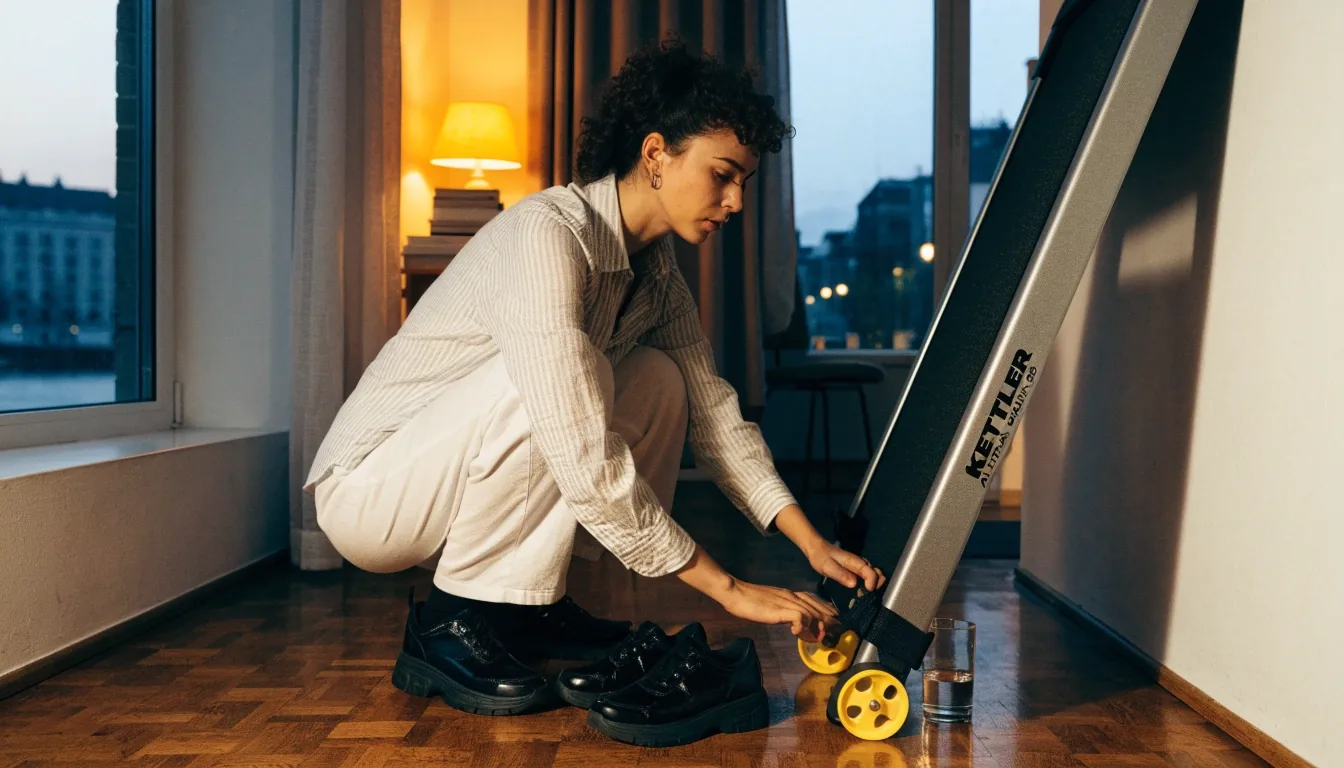
120 x 42 cm walking surface, 110 kg user limit, 1 to 12 km/h speed range
Fitshop
-
VEVOR walking pad
1 to 6 km/h speed range, 120 kg user limit
VEVOR retailer listing
-
Toputure 2-in-1
12 km/h top speed
Cdiscount
-
WalkingPad 2-in-1 range
12 km/h top speed
The brand's French store
Where a listing is silent, the cell stays empty on purpose. A guessed deck length reads as helpful and is not, because it pushes a comparison in a direction the retailer never stated.
What we don't do
We do not run timed durability tests, measure decibels in a controlled room, or disassemble motors. We do not publish prices, because French retail pricing shifts and a stale figure misleads more than it helps. We do not accept paid placement in the ranking, and a brand being well known does not lift it above a better-suited machine.
If we cannot verify something, it does not appear. That is a smaller claim than "tested by experts," and it is the one we can actually stand behind. It also shapes what you will not find here: no invented test scores, no durability figures pulled from nowhere, no ranking position that depends on who supplied the machine.
Why apartment constraints carry so much weight
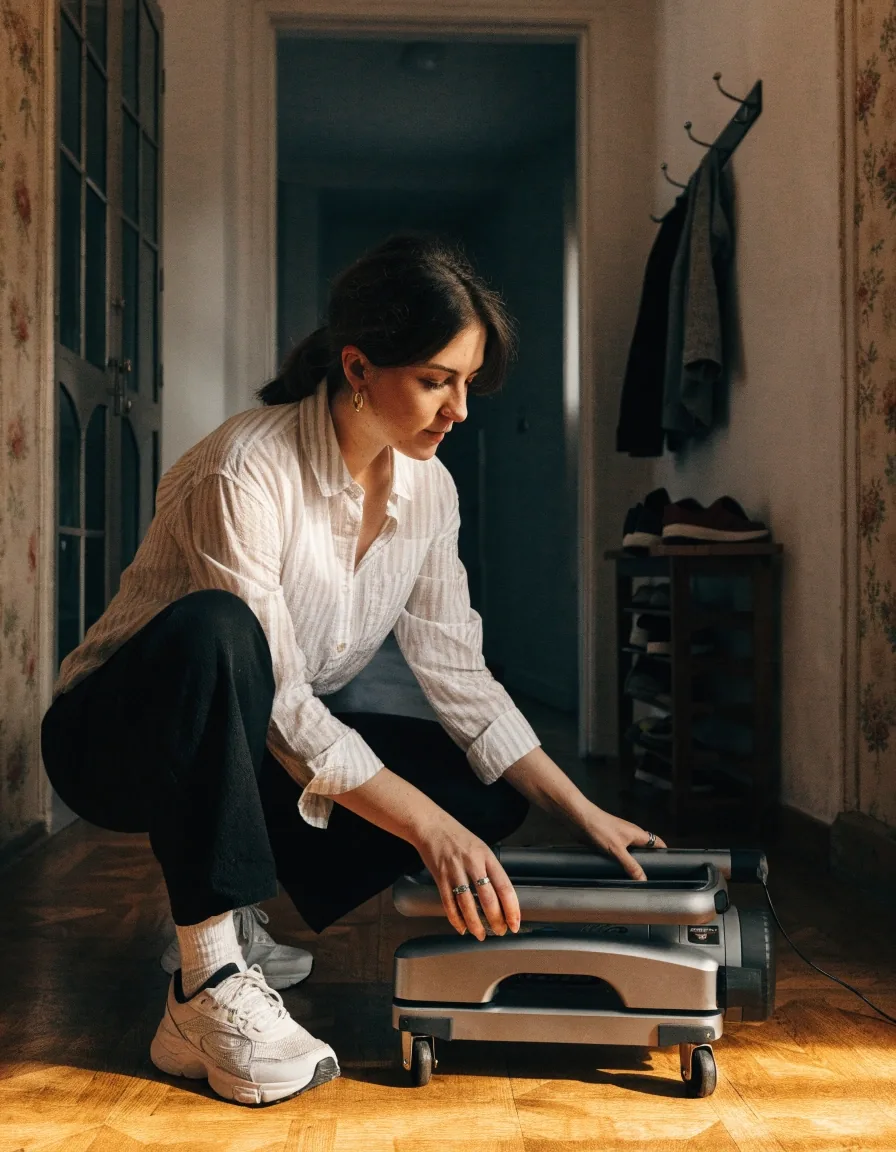
Our ranking criteria are shaped by the audience, not by the products. Folded size and storage matter because a 25 m² studio has nowhere to put an unfolded machine. Noise matters because shared walls are the norm. Deck length matters because a cramped stride ends the habit faster than boredom. Speed range matters because buying a 12 km/h machine to walk at 4 km/h is wasted money.
Each of these criteria comes from a real constraint in compact French housing, not from a generic checklist. A ranking that scores a machine on incline programs and heart-rate straps is answering questions our reader is not asking, in a flat where the machine has to slide under a desk by nine in the morning.
-
Folded size and storage
Where it lives when you are working, eating, or sleeping in the same room.
-
Noise through shared walls
What a walking pace sounds like to the neighbour on the other side of the plasterboard.
-
Deck length and stride
A short deck is the reason most home walking routines stop before they start.
-
Speed range you will use
Paying for a 12 km/h ceiling when your normal walk sits around 4 km/h.
Brand ranges and how we handle them
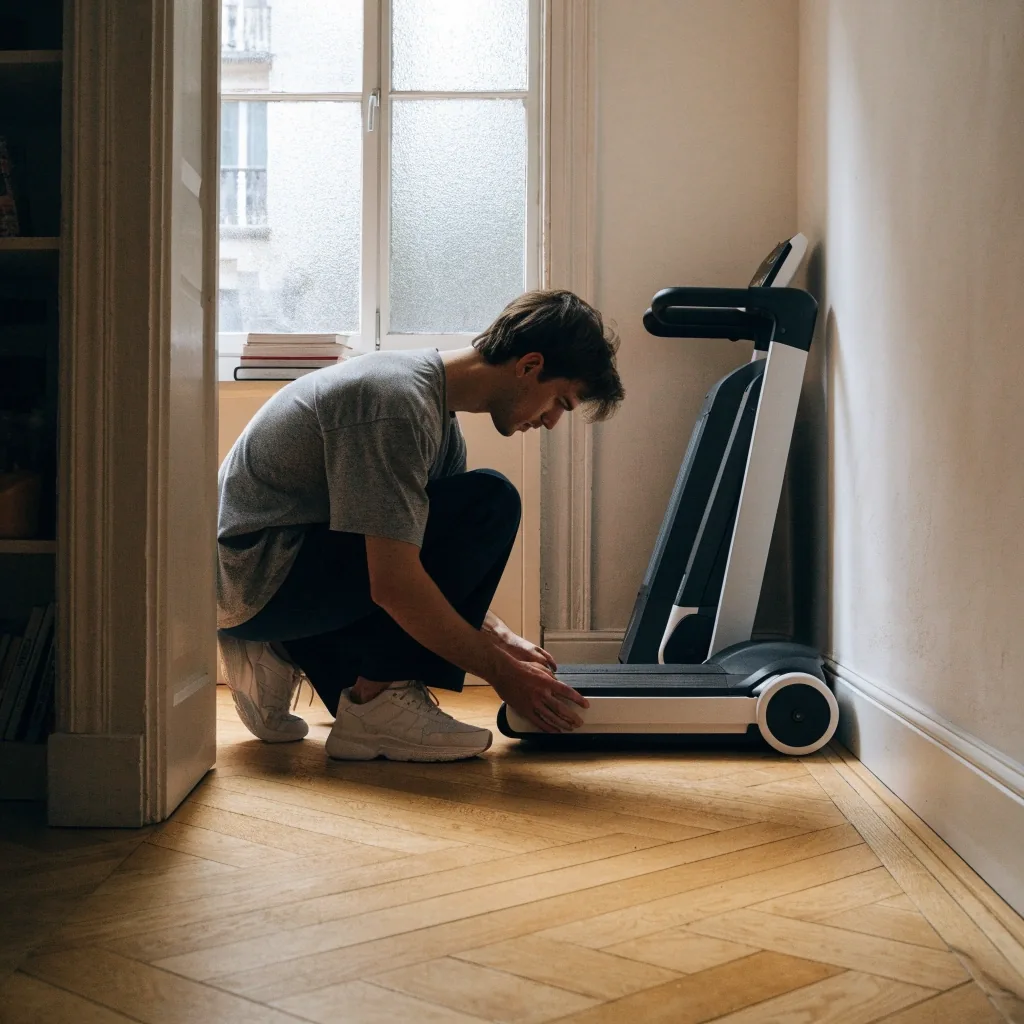
Tunturi appears in our ranking as a range rather than a single model, which is unusual. We include it because Fitshop lists Tunturi as an established home-fitness brand, and brand support matters for a machine that lives in your flat for years. Treat it as a comparison point, not a specific recommendation: each Tunturi model needs its own spec check.
The same logic applies to retailer categories. Cdiscount grouping Toputure with compact domestic machines tells us the intended use, not how the machine performs. A category shelf is a shop floor decision, and we read it as a hint about who the product was built for, nothing more.
How updates work
We recheck listings when a reader flags a change, and when a retailer we rely on updates a product page. If a speed range or weight limit moves, the ranking entry changes with it. Corrections get priority over additions.
If you have spotted a spec that no longer matches the retailer's page, send it through the contact page with the model name and where you saw it. We would rather fix an entry than defend it. When a correction changes a ranking entry, the entry itself changes — we do not leave the old figure in place with a footnote.
Include the model name and the retailer page where the figure appears. That is usually enough for us to confirm and update the entry.
Questions we can't answer
Where our sources run out, we would rather tell you than fill the gap with confident-sounding language. These are the parts of the buying decision that no published listing settles.
-
Will it feel right under your desk?
We cannot say. Desk height, chair, and stride vary too much from one flat to the next. Measure your own working position before you choose a deck length.
-
How will your neighbour react?
We cannot predict it. Shared walls, floor build-up, and walking versus jogging all change what travels through. Run a short walking pace first, in daylight, and judge from there.
-
Will it still work in three years?
We cannot confirm long-term reliability on models that have not been on the market long. Published listings do not cover wear over time, and we will not invent a figure for it.
Use the published numbers, then judge the rest against your own flat.
Common questions about the ranking
Short answers to the things readers ask most often about how the top 7 is built and kept current.
Are these products tested in person?
Not by us. All specifications come from published retailer and brand listings, which we name on each ranking entry so you can check them.
How often does the ranking change?
Entries update when a retailer changes a listed spec or a reader flags a discrepancy. Corrections to existing entries take priority over new additions.
Do brands pay for placement?
No. Ranking position reflects suitability for small apartments and published specifications. Established brand names do not receive preferential treatment.
See the ranking this method produces
Every entry names its source and its fit for a compact flat. If a figure matters to your decision, it is there to check.