Top 7 for small French flats
Seven compact walking products for small French flats
Most Paris flats don't have a spare room for a treadmill — that is the whole reason walking pads and foldable treadmills exist. We looked at seven products sold through French retailers, from desk-only walking pads to 2-in-1 models that reach jogging speed, and wrote down what each one is actually good at.
What counts as a compact walking product here
We keep three loosely defined groups. Walking pads are the flat, low-deck machines built for walking under a desk, usually with a top speed around 6 km/h. Foldable treadmills fold at the frame and often reach 8 to 12 km/h, so they can handle a light jog. Between them sit the 2-in-1 models that switch between walking and running modes with a remote control.
If a machine needs a permanent two-metre footprint and a dedicated room, it doesn't belong on this list. Everything you'll read here had to earn its place in a small flat first — fit, fold, and the noise it makes against a shared wall matter as much as the numbers on the box.
- Walking pads
- Flat deck, walking only, top speed near 6 km/h
- Foldable treadmills
- Folds at the frame, 8–12 km/h, light jogging
- 2-in-1 models
- Remote-switched walking and running modes
Three numbers decide everything in a compact flat: folded thickness, deck length, and noise.
The seven products in the ranking
Pulled from retailers French buyers already use — Cdiscount, Fitshop, Ubuy France, VEVOR France, and the WalkingPad store.
- Budget under-desk VEVOR walking pad treadmill Flat low-deck machine, 1–6 km/h walking range, listed max user weight 120 kg
- Steady indoor walking Kettler Alpha Walk 400 120 x 42 cm running surface, listed max user weight 110 kg, easy to judge on a spec sheet
- Walking and light jogging Hop-Sport HS-850WP Primo 2-in-1 switching with a remote, tops out at 8 km/h
- Desk walking SupeRun walking pad Installation-free and portable, described by the brand as ready to use out of the box
- Established-brand comparison Tunturi treadmill range Sits in the line-up as a range rather than a single model, useful for brand-to-brand context
- Full fold + running speed Toputure 2-in-1 Folds at the frame and reaches 12 km/h, so walking and jogging share one machine
- Full fold + running speed WalkingPad X21 Also reaches 12 km/h, sold through the brand's own store
Why small apartments change the spec sheet
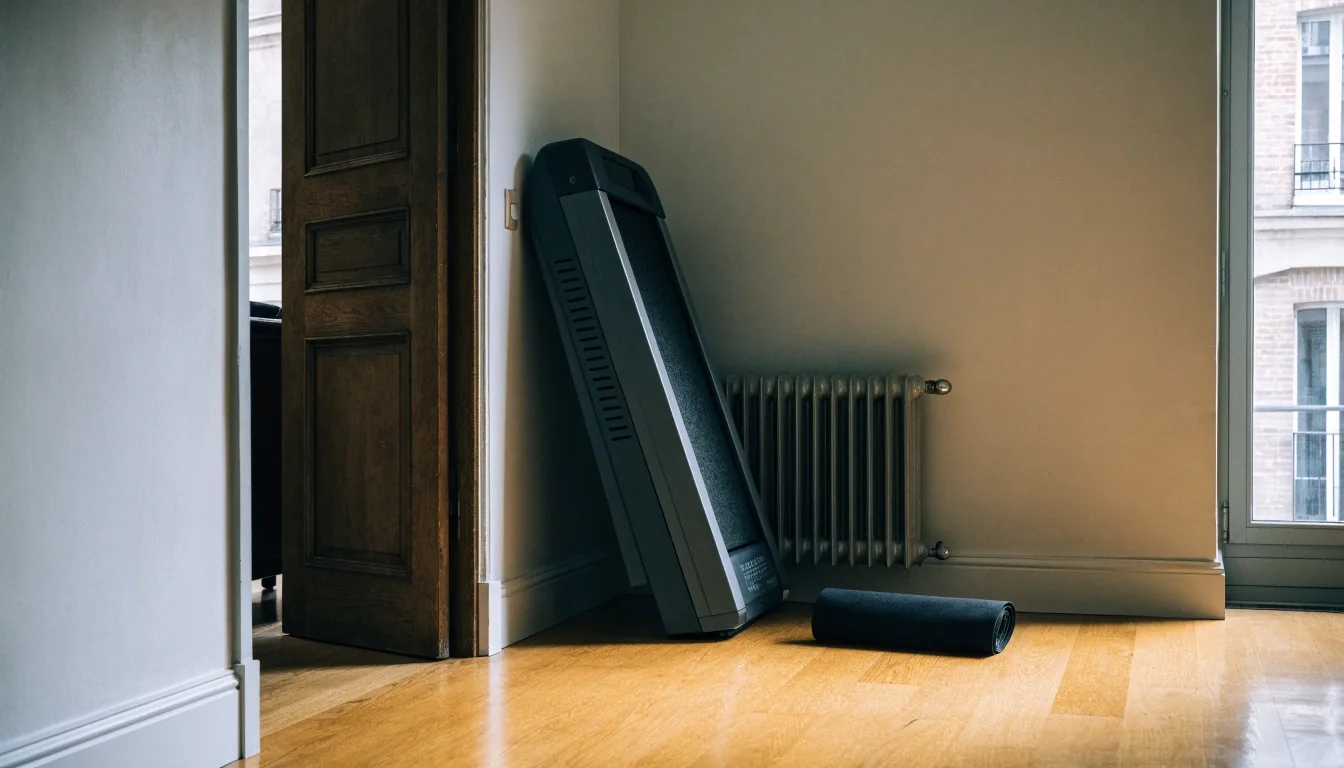
In a compact flat, three numbers matter more than anything on a marketing page. Folded thickness decides whether the machine slides under a sofa or stands behind a door. Deck length decides whether your stride feels natural at 5 km/h or cramped after ten minutes. Noise matters when your neighbour's bedroom shares a wall with your living room.
A model with a 120 x 42 cm running surface, like the Kettler Alpha Walk 400, gives you noticeably more stride room than a narrow desk pad — and that difference shows up on longer walks. Measure the folded machine, not the room. A floor mat under the deck also cuts vibration transfer to the flat below, and it costs far less than a complaint.
Hybrid work is the real use case
If you work from home three days a week, a walking pad under a desk turns two meeting-heavy hours into low-intensity movement. That's the pattern the SupeRun and VEVOR models are built for: no installation, a remote in your hand, and a speed you can hold while typing.
The 2-in-1 machines serve a different day. On a morning with no calls, you fold up the desk setup, raise the speed, and use the same machine for a jog. Knowing which of those two days describes your week is the fastest way to pick a category — it settles half the shortlist before you compare a single spec.
Desk day
Walking pad under the desk, 1–6 km/h, remote within reach, machine stays flat all day.
Quiet morning
2-in-1 moves to jogging speed, deck raised, more free space needed behind it than in walking mode.
Either way
Check max user weight against your own figure before anything else on the listing.
What separates a good pick from an average one
-
Motor
Brushless motors run quieter and last longer than the basic motors found in the cheapest pads. If a listing never mentions the motor type, treat that as one of the unknowns you'll have to live with.
-
Weight limit
Max user weight is a hard limit, not a suggestion. The VEVOR pad lists 120 kg and the Kettler Alpha Walk 400 lists 110 kg, so check that number before anything else.
-
Speed honesty
A machine rated to 8 km/h is a walking-and-light-jog product, not a substitute for a gym treadmill at 14 km/h. Buy it for the job it lists, not a heavier one.
-
Everyday controls
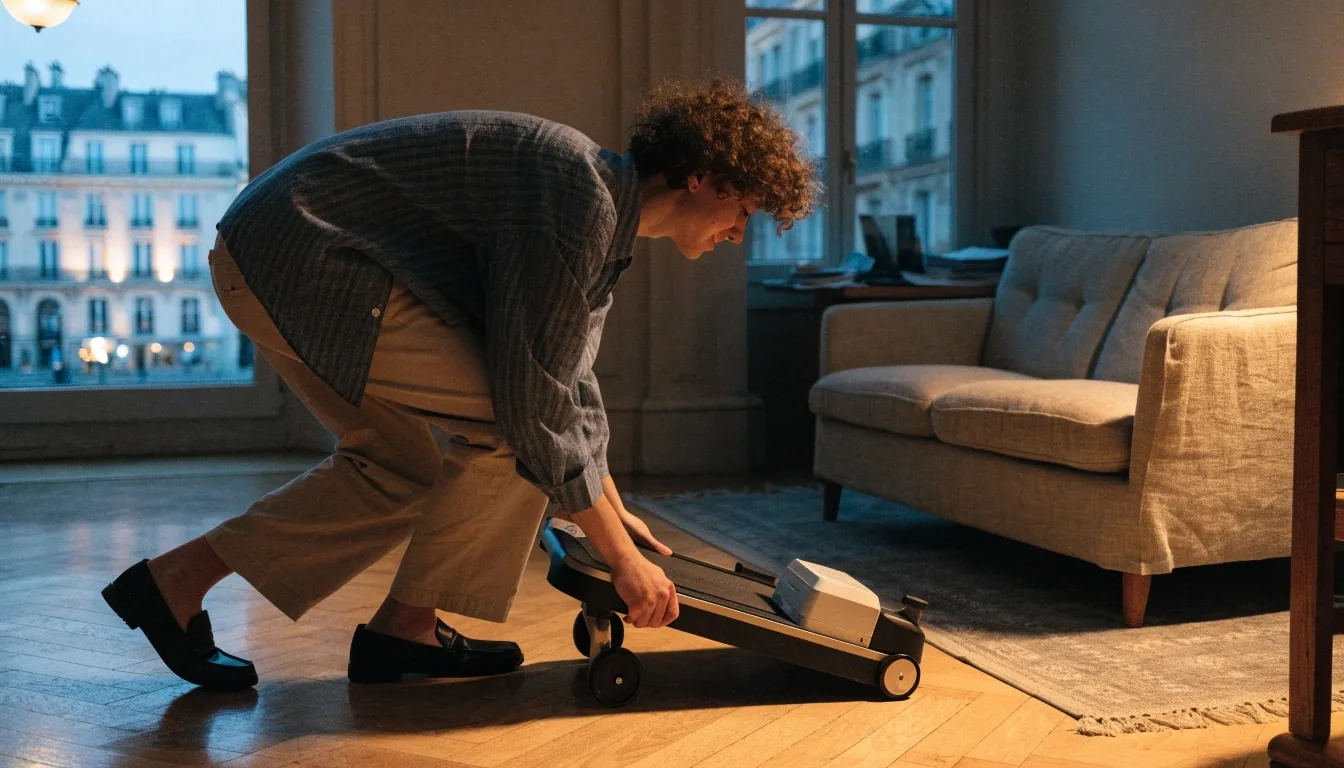
Transport wheels sound trivial until you're moving 30 kg across a parquet floor. A remote you can reach without breaking stride is worth more than a bigger LED display.
How the ranking was built
We compared published specs from French retailer listings, then grouped machines by what they suit: desk walking, steady indoor walking, or light jogging. Speed range, running surface, max user weight, foldability, and control method carry the most weight.
Brand reputation counts too, which is why Tunturi sits in the comparison even though it's a range rather than a single model.
How we review these productsCommon beginner mistakes
Five things we see again and again in buyer questions. Each one is cheap to avoid before you order and annoying to fix afterwards.
-
1
Expecting running sessions from a walking pad
A 1 to 6 km/h pad does one job well: walking while you work. Running needs the 2-in-1 or foldable group.
-
2
Measuring the room but not the folded machine
Folded thickness and folded length are the two figures that decide whether it lives behind a door or in the middle of the room.
-
3
Ignoring the floor underneath
A thin mat under the deck reduces vibration transfer to downstairs neighbours and costs far less than a complaint.
-
4
Starting at 6 km/h on day one
Most pads feel steadier at 3 to 4 km/h while you learn the belt. Speed up once your stride stops drifting.
-
5
Forgetting the space behind a 2-in-1
Running mode needs more free space behind the deck than walking mode does. Check that before you commit to a position.
Who each format suits
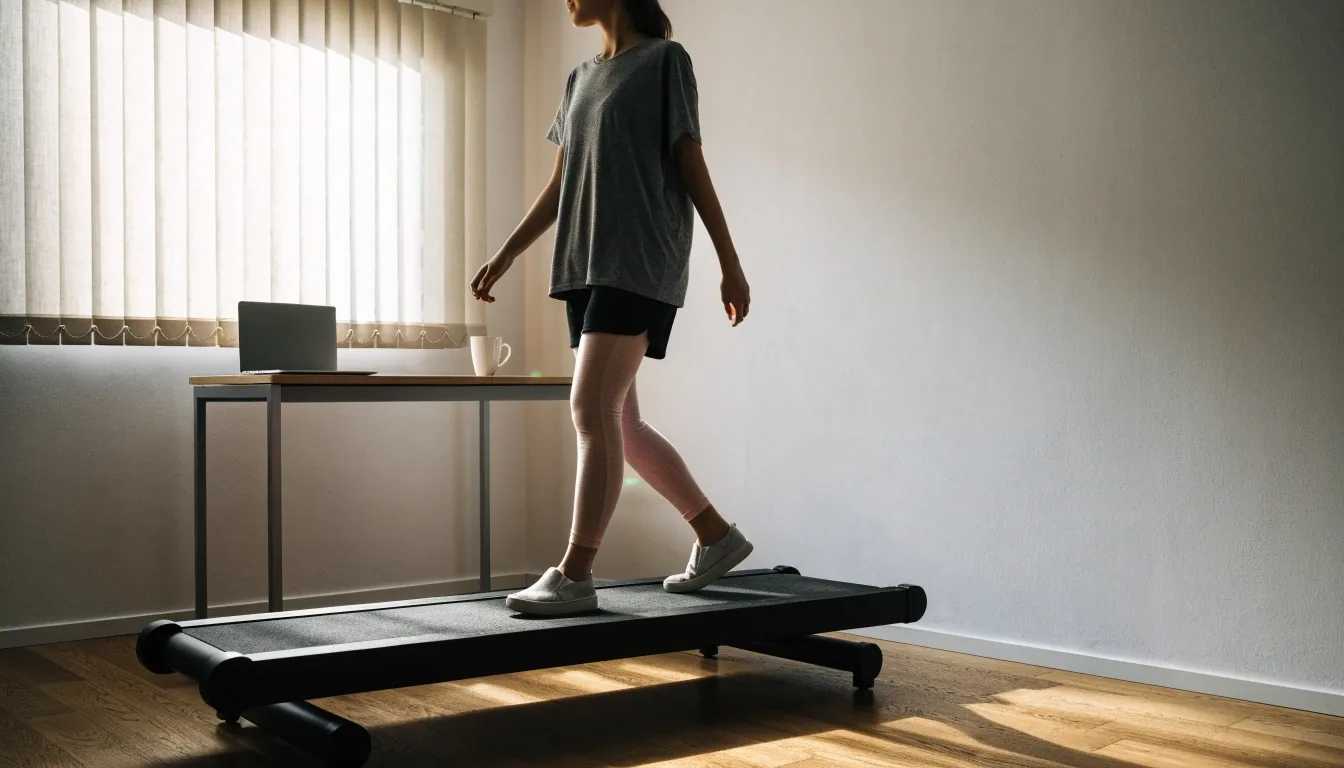
Desk workers with limited floor space do best with a flat walking pad in the 1 to 6 km/h band. Renters who want one machine for walking and jogging should look at the 2-in-1 group, where the Hop-Sport HS-850WP Primo tops out at 8 km/h and the Toputure and WalkingPad X21 reach 12 km/h.
Compare walking pads and foldable treadmillsAnyone who wants a clear spec sheet with fewer unknowns will find the Kettler Alpha Walk 400 easier to judge. If you're unsure between the two families, the comparison page walks through the trade-offs side by side — folded size, deck length, speed band, and how each one handles a shared wall.
Where the ranking column carries the numbers, the buying guide carries the measuring tape: what to check in your own flat before a machine arrives, and which figures on a product listing are worth trusting.
Read the buying guideQuestions buyers ask before ordering
The short answers below cover the things that come up most often. Longer explanations live on the FAQ page, and the ranking page carries the specs side by side.
FAQWhat is the difference between a walking pad and a treadmill?
A walking pad is a flat, low-deck machine built mainly for walking, often with a top speed near 6 km/h, like the VEVOR model. A treadmill has a raised frame and higher speeds. Foldable and 2-in-1 machines sit between the two.
Can a walking pad fit under a desk in a small flat?
Yes, that's the design intent. Models such as the SupeRun walking pad are described as installation-free and portable, with a remote control so you can change speed without leaving your chair.
How much speed do I need for walking at home?
Most people walk between 3 and 6 km/h indoors. A pad with a 1 to 6 km/h range covers that. If you want light jogging, look at 2-in-1 models that reach 8 or 12 km/h.
Are foldable models stable enough for daily walking?
Stability depends on the frame and your speed. Foldable machines from Kettler, Hop-Sport, and WalkingPad are sold for home walking and light running; keeping to a steady walking pace and using a floor mat helps.
What running surface size is comfortable?
The Kettler Alpha Walk 400 lists a 120 x 42 cm surface, which suits a natural stride at walking speed. Narrower desk pads save space but feel tighter on longer sessions.
Which features matter most in a small apartment?
Folded size, transport wheels, noise, and max user weight. The VEVOR pad lists 120 kg and the Kettler 110 kg, so check that limit against your own weight first.
Where to start
Read the comparison page if you already know you want a walking pad rather than a foldable treadmill. Read the buying guide if you're still deciding what to measure in your flat. Both pages link back to the ranking so you can check specs side by side.
If a listing detail looks wrong, or you've used one of these machines in a small apartment, the contact page reaches our editorial inbox directly.
Editorial questions are answered Monday to Friday, 9:00 AM – 6:00 PM.
Reaching the editorial desk
Corrections, spec updates, and hands-on impressions from readers who actually own one of these machines are all welcome. Send the machine name and the detail you think is off, and we will check the listing again.
Address
14 Rue de la Paix
75002 Paris, France
Hours
Monday to Friday
9:00 AM – 6:00 PM
Phone