Vital Nail Brilliance
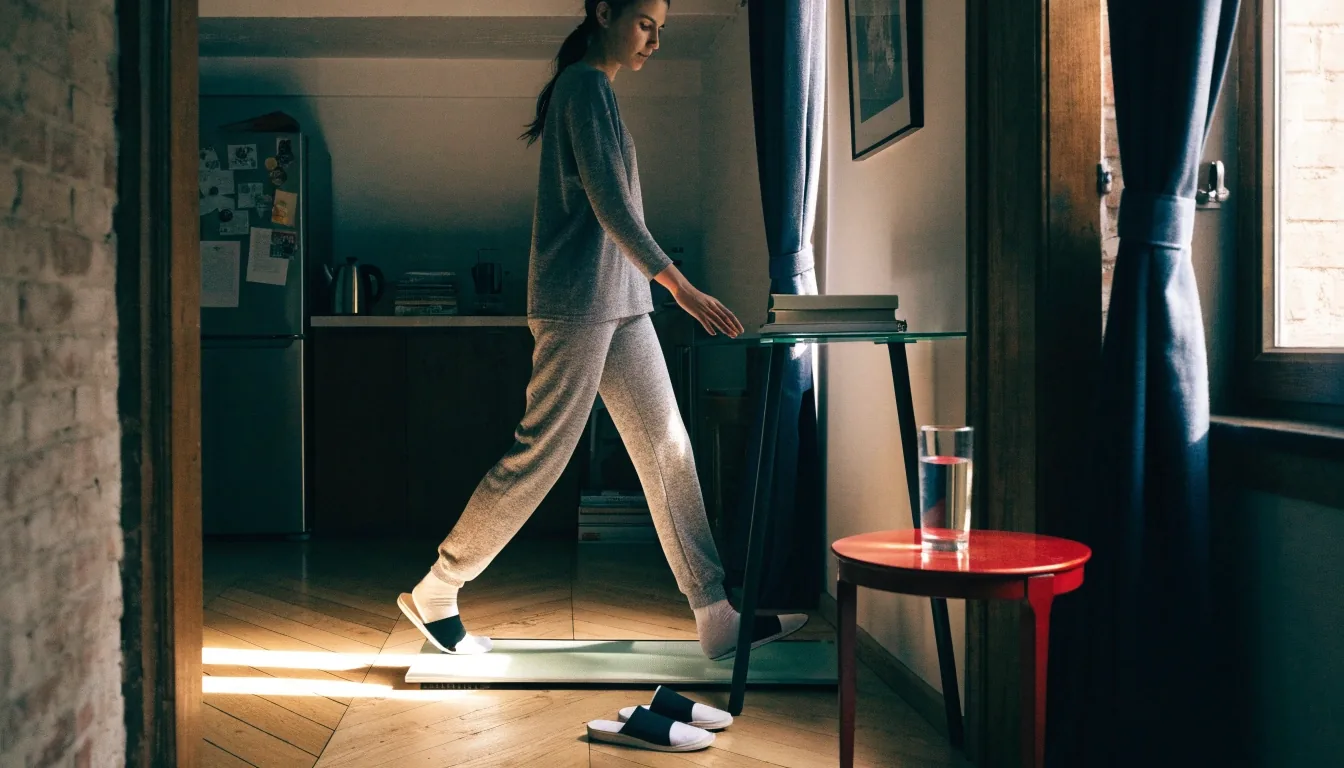
A flat walking pad stored under a bench in a small Paris apartment

Reader questions, in writing

Questions about walking pads at home

Practical questions from readers in small French flats, answered with the specs we can verify and honest notes where we can't. If your question isn't here, the contact page reaches us directly.

Choosing between formats

The three shapes sold for home walking behave differently, and the difference is mostly speed and footprint. Match the machine to the week you actually have.

If your sessions are walks at a desk, take the flat pad. If one of them is a jog, take the second or third group.

Flat walking pad

Walking only

Flat and built for walking, typically capped around 6 km/h, like the VEVOR model. No raised frame, so it slides under furniture when the session ends.

Best for: desk walking, low-speed sessions, very small rooms where the deck must disappear by evening.

Foldable treadmill

Walking and jogging

A raised frame that often reaches 8 to 12 km/h, like the Kettler Alpha Walk 400 and its 1 to 12 km/h range. It stands upright against a wall or in a corner when idle.

Best for: a real warm-up, an easy jog, or an uphill-feel session without leaving the flat.

2-in-1 machine

Both modes

Does both jobs: the WalkingPad X21 and Toputure both reach 12 km/h, while the Hop-Sport HS-850WP Primo tops out at 8 km/h. Flattened, it behaves like a pad; folded, like a treadmill.

Best for: one machine for two people with different routines, or one person who walks on weekdays and jogs on weekends.
Fitting a machine into a small flat

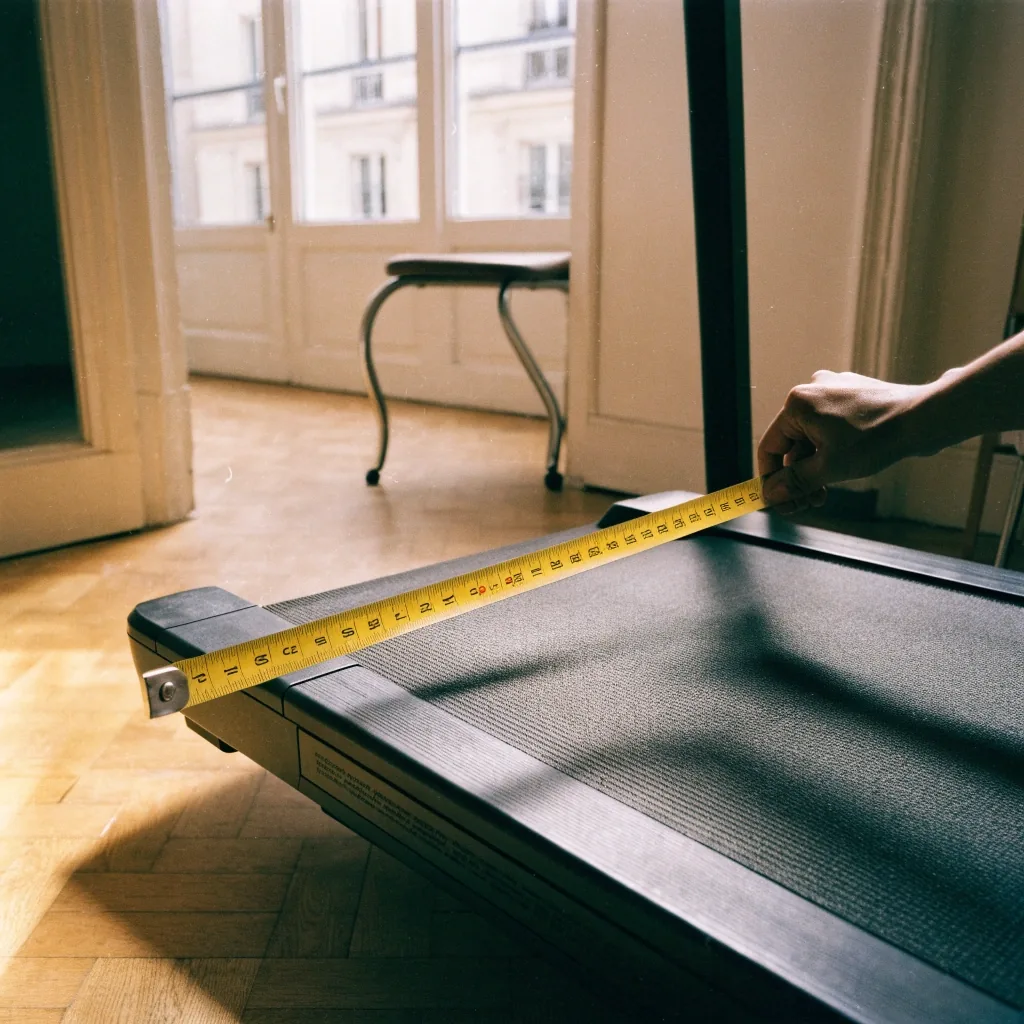
Measure the folded footprint and the deployed deck length before you order.

A 120 cm running surface needs roughly that much clear floor, plus room to step on and off. If it doesn't have a home when idle, it becomes a trip hazard instead of a habit.

Running surface and stride comfort

The Kettler Alpha Walk 400 lists a 120 x 42 cm surface, a useful benchmark for comfortable daily walking. Narrower desk pads are fine for a short stride at low speed but leave less margin as you speed up.

If you're tall, or you plan to build up to brisk walking, deck length should outrank most other features in your decision. Width matters too, particularly if you tend to drift sideways while watching a screen. A cramped deck ends the routine faster than boredom does.

A measuring tape laid along the deck of a folded home treadmill

Weight limits and safe use

Published max user weight is a limit, not a target. Fitshop lists 110 kg for the Kettler Alpha Walk 400; VEVOR France lists 120 kg for its walking pad. Staying inside that figure protects the belt and motor over time.

Kettler Alpha Walk 400
Listed at 110 kg max user weight · 1 to 12 km/h · 120 x 42 cm deck
VEVOR walking pad
Listed at 120 kg max user weight · walking pace · under-desk format
WalkingPad X21 and Toputure
Both reach 12 km/h in the 2-in-1 format

If you're near the limit, choose a model with more headroom. Beyond that, the practical safety points are simple: use the machine on a level floor, keep the area behind it clear, and step off before adjusting anything more than speed with the remote.

Speed, noise, and where it lives

How much speed you actually need

Most indoor walking happens between 3 and 6 km/h. A 1 to 6 km/h pad covers that completely. Above 6 km/h you're in jogging territory, where an 8 km/h machine handles an easy jog and a 12 km/h machine covers a light run.

Decide from your real week, not your intentions. The most common wasted spend in this category is paying for 12 km/h and never leaving 4. There's nothing wrong with a fast machine; it's just not free in money or floor space.

Noise in an apartment building

Walking pace is reasonably quiet on most pads. Jogging is louder, because the belt and your footfall both increase with speed. Brushless motors run with less noise than basic motors, and a floor mat under the deck reduces how much vibration reaches the room below.

If you live above someone, keep faster sessions short and at reasonable hours. No spec on a listing measures how your specific floor construction behaves, so treat the mat as part of the purchase rather than an accessory.

Storage, weight, and moving the machine

Transport wheels are listed on 2-in-1 and foldable models for a reason: these machines are heavy, and lifting one into position daily gets old within a week. Flat pads are lower and easier to slide but still need handling.

Check the folded dimensions against your storage spot, and check whether you can move the machine yourself. The SupeRun listing describes its walking pad as portable, which reflects its intended use under a desk. Portability claims are worth reading in the context of where the machine goes when you're not on it.

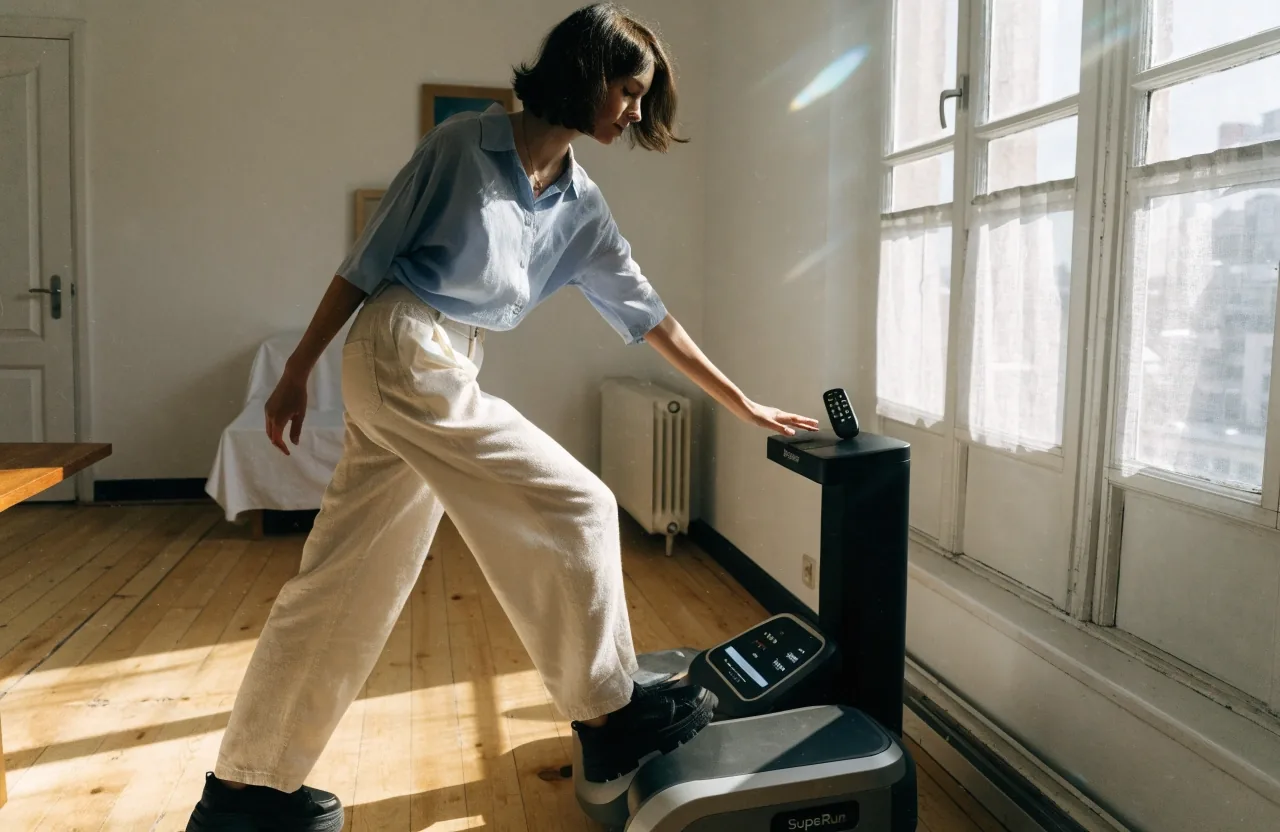
A person stepping onto an under-desk walking pad beside a standing desk

Answers to the questions readers send most

Three questions come up again and again, so they get their own place here before the CTA. Everything below is drawn from published listings and the specs we could check.

Can I use a walking pad under a standing desk?

Yes, that's what flat pads are designed for. The SupeRun and VEVOR models both list remotes and are described for under-desk use. Check the deck height against your desk clearance.

How much does a walking pad cost?

We don't publish prices. Retailers including Cdiscount, Fitshop, Ubuy France, and VEVOR France set and change prices, so check the current listing before ordering.

Will a walking pad disturb my downstairs neighbour?

At walking speed, usually not much. Jogging is louder. A mat under the deck and keeping faster sessions to reasonable hours reduces the risk.

How do I keep the machine usable after the first month?

Put storage within the same room as the machine, so setup stays a two-step job instead of a chore. Wipe the belt and keep it dry. Speed and the belt tend to wear together if you sit above the listed weight limit, so stay inside it and the deck lasts.

Which model is right for a studio flat?

Start with the storage question. If there's no wall or corner to stand a foldable frame, a flat pad that slides under a bed or sofa is the realistic choice. If you want 8 km/h or more for the occasional jog, accept the upright footprint and pick a corner for it.

Still unsure? Ask the editorial team.

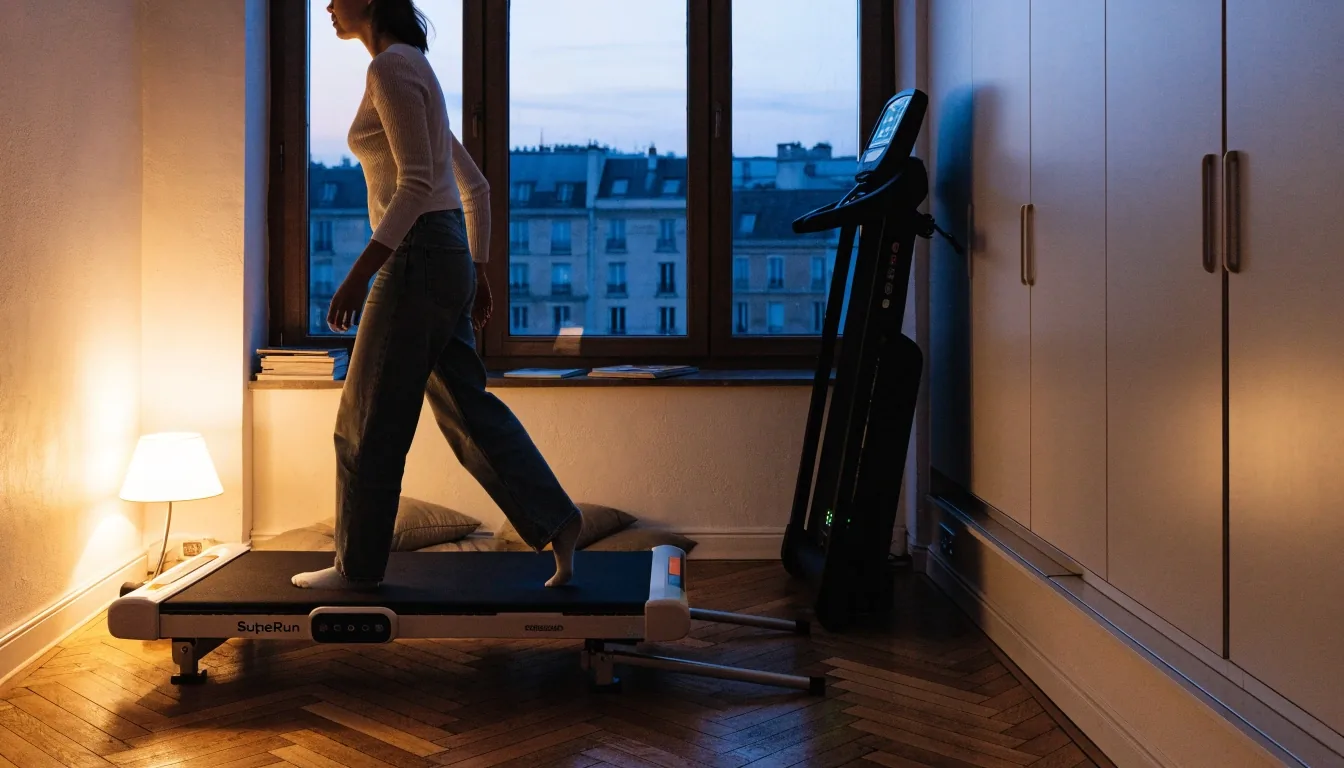
A compact home walking setup at rest in a small apartment at dusk

Put these answers to work

Once you know the format, the speed, and the storage spot, the rest is comparing the current listings. The pages below carry the specs we used in these answers.